How a Weather 10 Days Forecast Helps You Plan Ahead
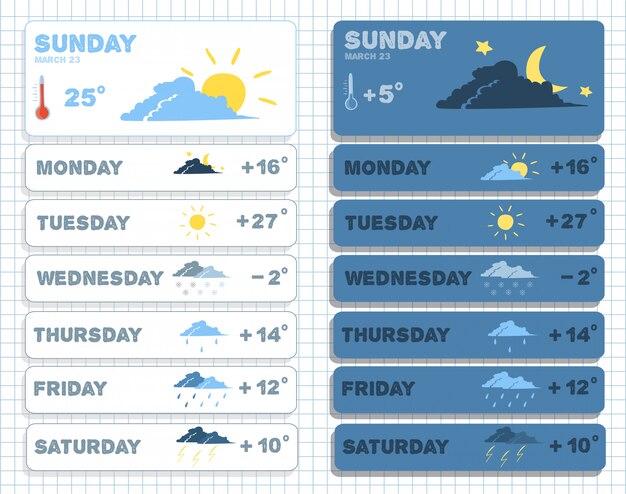
Introduction: Why a weather 10 days outlook matters
A reliable weather 10 days forecast helps communities, businesses and individuals prepare for changing conditions beyond the short-term. Ten-day outlooks are especially relevant for travel planning, agriculture, event management and early preparations for potential extreme weather. Understanding both the utility and the limits of such forecasts improves decision-making and reduces weather-related risks.
Main body: How 10-day forecasts work and what to expect
Forecast methods and uncertainty
Weather 10 days forecasts are produced by numerical weather prediction models that simulate the atmosphere using current observations. Forecasters increasingly rely on ensembles — multiple model runs with slightly different initial conditions — to express forecast confidence. While day-to-day details (exact timing and intensity) are generally more reliable in the 1–3 day window, many meteorological services provide skillful guidance out to 7–10 days for larger-scale patterns such as the likelihood of warm or wet periods.
Interpreting probabilities and trends
At the 10-day horizon, forecasts often emphasize trends and probabilities rather than specific hourly predictions. Phrases such as “increasing chance of rain” or maps showing percent probabilities can be more useful than single deterministic numbers. Users should look for ensemble spread and official confidence levels to gauge how much to trust a particular scenario.
Practical uses and verification
Planners can use a weather 10 days outlook to set contingency plans—rescheduling nonessential activities, protecting crops, or pre-positioning emergency resources. Regular verification by meteorological services helps refine models and communication; users should follow updates as models assimilate new data and as confidence improves or declines.
Conclusion: What readers should do
A weather 10 days forecast is a valuable planning tool when treated as a probabilistic guide rather than absolute certainty. Check official forecasts from national meteorological agencies, monitor updates frequently, and combine long-range outlooks with short-term warnings for actionable decisions. Adopting flexible plans and paying attention to confidence indicators will make 10-day forecasts more useful and help reduce weather-related disruption.