Understanding the CBOE Volatility Index (VIX): A Practical Guide for Investors
Introduction: Why the CBOE Volatility Index Matters
The CBOE Volatility Index, widely known as the VIX, is a benchmark gauge of expected near‑term market volatility. For investors, risk managers and policy observers, the VIX is important because it summarizes market expectations of S&P 500 volatility over the next 30 days and often spikes during periods of uncertainty. Understanding the VIX helps market participants assess sentiment, price risk, and consider hedging strategies.
Main body: What the VIX Measures and How It Works
Definition and calculation
The VIX is published by the Chicago Board Options Exchange (CBOE). Introduced in 1993 and updated to its current methodology in 2003, the index derives a 30‑day expected volatility estimate from a broad range of S&P 500 option prices. Values are expressed as an annualized percentage—so a VIX reading of 20 implies an anticipated annualized volatility of about 20% over the next month.
Interpretation and typical behavior
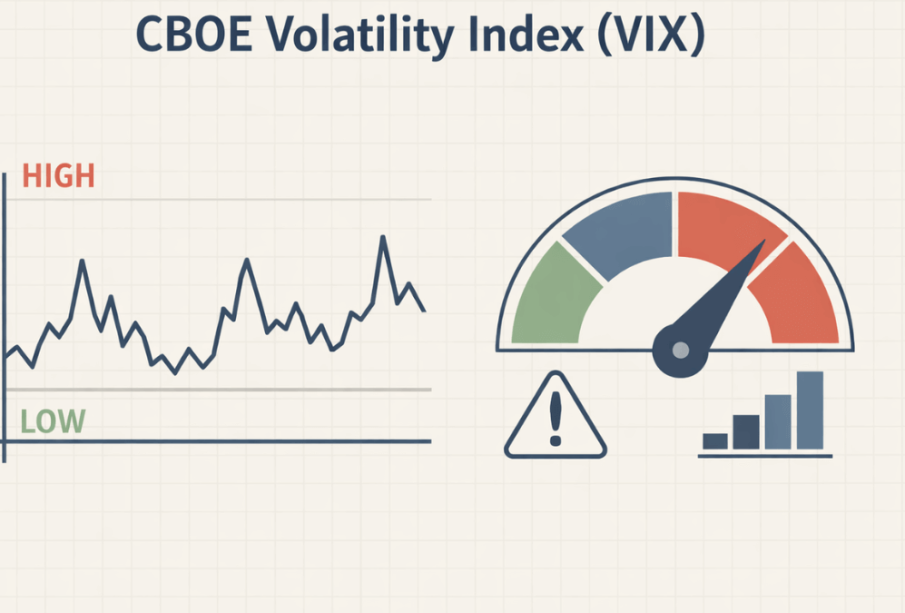
Market participants often call the VIX the “fear gauge.” Low readings typically coincide with calm or complacent markets, while high readings appear during stress, sharp selloffs or major economic shocks. The VIX is mean‑reverting: it tends to rise quickly during crises and then gradually fall as markets stabilize. Importantly, it reflects expected volatility, not market direction.
Instruments and practical use
Investors can access volatility exposure through VIX futures and options traded on the CBOE and through exchange‑traded products that track VIX futures. These instruments are used for hedging, tactical trading or portfolio risk management. However, costs, roll yield and structural differences between VIX futures and spot volatility mean these tools require careful understanding.
Conclusion: Takeaways and Implications for Readers
The CBOE Volatility Index is a widely followed, forward‑looking measure of S&P 500 volatility that provides insight into market sentiment and risk. While useful for gauging market stress and informing hedging decisions, it is not a standalone market timing tool. Investors should treat the VIX as one input among many—useful for risk assessment, scenario planning and designing hedges, but requiring awareness of instrument mechanics and potential costs when implementing volatility strategies.