hindustan aeronautics limited: Role, projects and recent developments
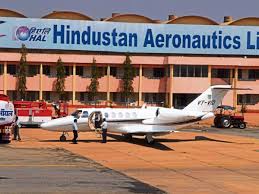
Introduction: Why hindustan aeronautics limited matters
Hindustan Aeronautics Limited (HAL) is a central state-run entity in India’s aerospace and defence sector, active across aircraft, helicopters, space systems and maintenance, repair and overhaul (MRO). Its capabilities in aircraft MRO, helicopter MRO, power plant services and systems make HAL a cornerstone of indigenous aviation capability. Understanding HAL’s history, ongoing developments and recent project changes is important for policymakers, industry stakeholders and the public tracking India’s defence-industrial base.
Main body: History, capabilities and recent events
Origins and structure
HAL traces its formal formation to 1 October 1964, with a registration date recorded as 16 August 1963, when Hindustan Aircraft Limited joined a consortium that included the IAF Aircraft Manufacturing Depot at Kanpur. Historically, the group expanded with planned factories in Koraput, Nasik and Hyderabad, underpinning its manufacturing footprint across multiple Indian locations.
Core capabilities
Today HAL’s activities span aircraft production, civil aviation support, helicopters, space-related systems and extensive MRO work. The company lists dedicated services in Aircraft MRO, Helicopter MRO, Power Plant Services and broader systems integration, reflecting a dual role as both original equipment manufacturer and long-term support provider.
Engines and technology partnerships
HAL has pursued engine programmes and international partnerships. A notable effort is the co-development of a turboshaft engine with Safran Helicopter Engines, based on the Safran Ardiden 1 design; this engine is reported to be in production and used on platforms such as the LUH, Dhruv, Rudra and Prachand. Additionally, the TM 333 engine, produced under licence in HAL’s Bangalore division, has been used on the HAL Dhruv Mk 1/2 and the HAL Cheetal.
Fighter and naval developments
HAL is associated with development work on platforms such as the Twin Engine Deck Based Fighter (TEDBF), described as a 4.5+ generation fighter intended for Indian Navy aircraft carriers. Separately, reports note HAL is out of a Rs 15,000-crore project to build five prototypes of a 5th-generation combat aircraft, with a private Indian firm taking the lead for prototype construction.
Conclusion: Outlook and significance
HAL remains a linchpin of India’s aerospace ecosystem through manufacturing, MRO and engine programmes, as well as collaboration on advanced platforms. The shift of a major 5th-generation prototype contract to the private sector signals growing competition and a changing industrial landscape. For readers, the key takeaway is that HAL is adapting—continuing technical partnerships and focusing on MRO and engine production—while India’s defence manufacturing sees increasing private participation and diversified responsibility for future combat aircraft programmes.